The Penn District
View all projectsGrid City
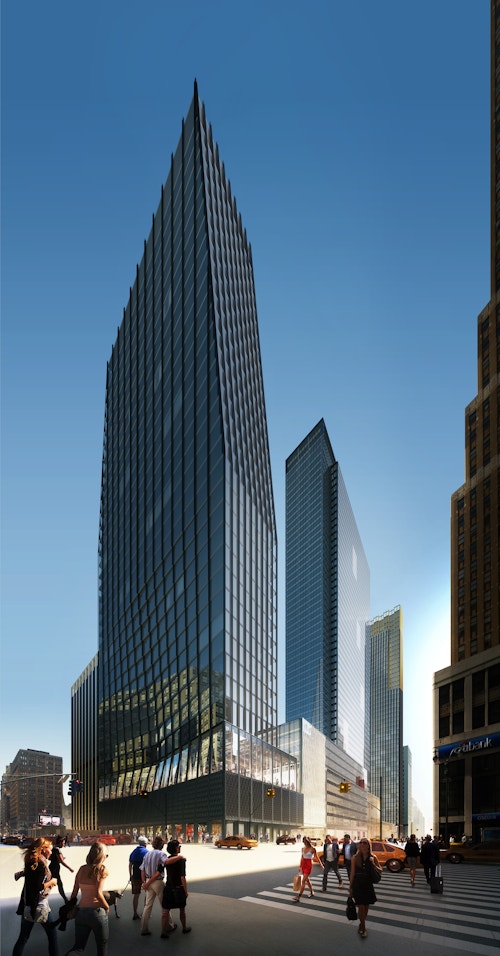
The Penn District exemplifies Manhattan’s urbanity: tall buildings, the grid, the multi-layered cityscape. Anchored by Penn Station and Madison Square Garden, it is a prime location primed to offer more. So, the principal landowners of the area invited us to rethink how The Penn District could be a more inviting place. Following months of study and design development, we drew up proposals for a district-level vision, block-level strategies and building-level interventions. Rooted in the special character of New York, we envisioned a retrofit of the existing built and urban fabric at a memorable scale. A number of these ideas have been implemented.

Context
In urban architecture, designing buildings is only part of the challenge. True innovation lies in reimagining the interplay between buildings, spaces, and the people who inhabit them. Manhattan’s Penn District offers a compelling canvas on which to explore this. We were invited to explore how new development could be stitched into their land holdings around Penn Station. The brief was to find opportunites to reactivate forgotten spaces and to increase the area's value - at one of New York's busiest public transit hubs.

A 'Great Estate', in skyscraper form
Challenge
The neighbourhood lies at the intersection of a proud urban legacy and the changing contemporary needs of Midtown Manhattan. On the one hand, it is a district shaped by a rich history, yet it had become strained by its fragmented urban fabric. As one of New York’s best-connected locations, it has the capacity to be one of the world’s most significant urban centres. One of the city’s prime transport hubs, Penn Station lies belowground (It has since been expanded above ground with the refurbishment of the Beaux-Arts Farley Post Office into Moynihan Train Hall). Madison Square Garden, one of America’s iconic venues sits within the milieu. Yet the surrounding office buildings were of an ageing stock, facing challenges of a disconnected pedestrian experience, underutilised public spaces, and a lack of cohesive character. It needed a refresh.
Concept
The task was to imagine ways in which to reshape an underperforming area into a more dynamic place. We worked closely with and for Vornado Realty Trust to get under the skin of the area and develop ideas for architectural and public realm improvements that would redefine this essential Midtown Manhattan neighbourhood. We drew inspiration from the geological bedrock that underpins the island’s iconic skyline, focusing on creating a series of interconnected experiences, bridging subterranean infrastructure with above-ground activity. This concept emphasised the importance of urban flows, the interplay of diverse building typologies and the stitching in of a new family of spaces that would collectively generate a vibrant, layered urban experience. Despite its proximity to vibrant Broadway, The Penn District had long felt disconnected — a mere 1.5 blocks away, but a world apart. Our study sought to bridge these gaps, ensuring the area felt like a more cohesive piece of city.

1/3
33rd Street and 7th Avenue
2/3
34th Street and 7th Avenue

3/3
New lobby for Penn One facing Madison Square Gardens

1/4
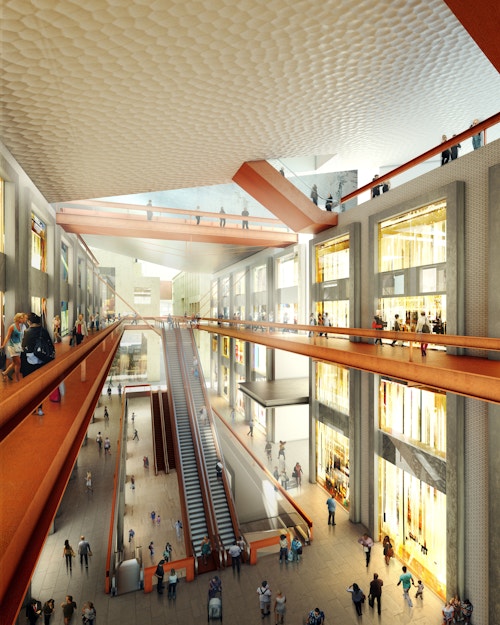
The joy of the station concourse

2/4
Civic office welcomes

3/4
Fun at the rooftop
4/4
Redefining the retail arcade
Process
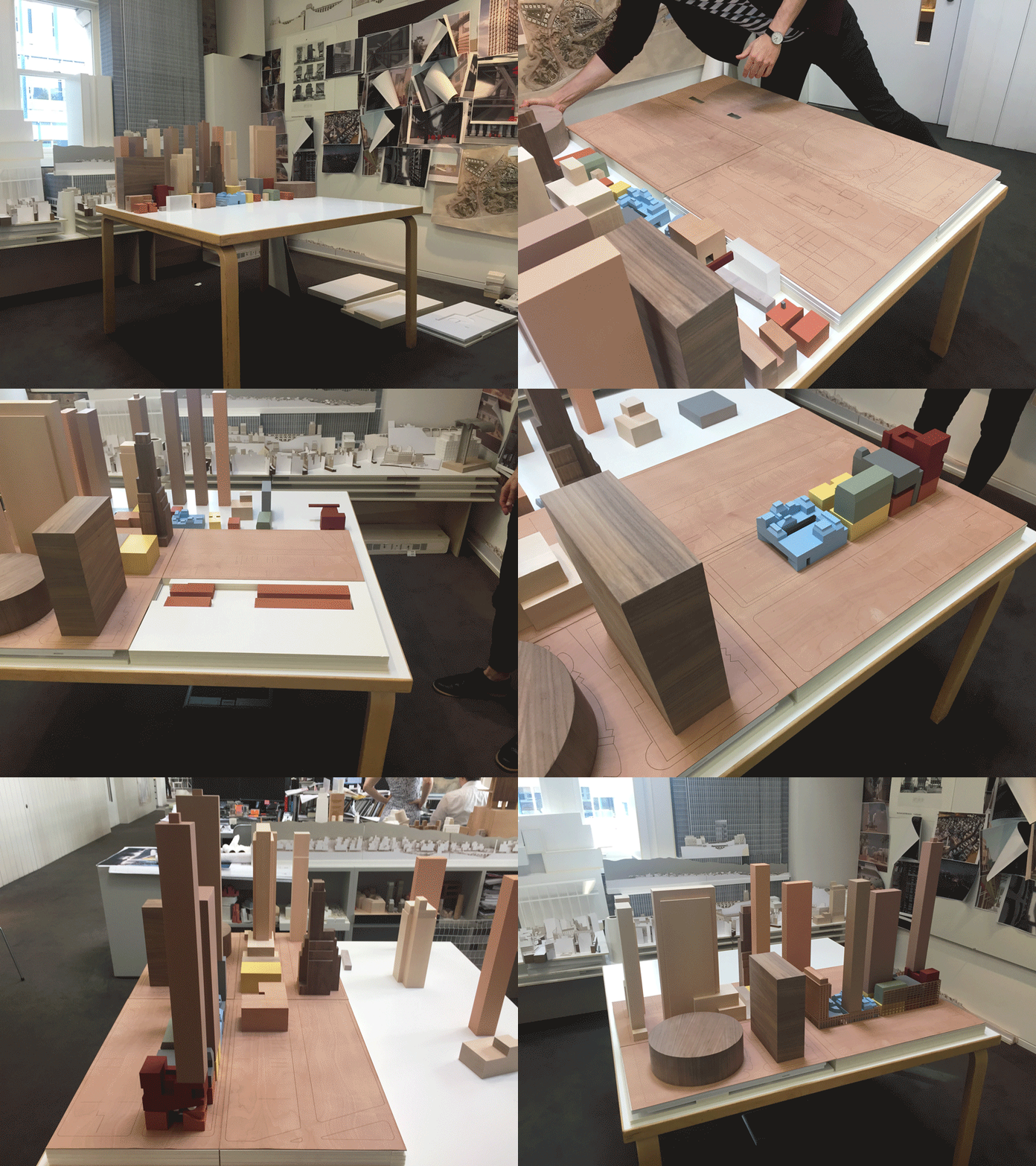
Our proposals unfolded across three scales: the district, the block, and individual buildings. At the district-level, we devised a vision. This was underpinned by analysing the urban grid. Used to the more irregular street patterns of London, the grid was particularly inspiring for us. We mapped the unique shifts in the neighbourhood’s grid from the orderly avenues and streets (such as 31 st and 33 rd ) to the dynamic junction at Hudson Yards, a new high-density development which was under construction next door. This allowed for us to identify opportunities for intervention. We then studied flows through a comprehensive analysis of pedestrian and transit movements, which highlighted the need to enhance connectivity between Penn Station, Broadway, and surrounding areas, spanning below-ground, grade-level, and elevated routes. The result was a proposed galleria system that interweaves underground connections, a new plaza at 32nd Street, and elevated public spaces which would create seamless transitions between transit hubs, entertainment venues and retail spaces.
Block-Level strategies focused on making places more inviting. We proposed a rethink of 1 Penn Plaza. Completed by Khan & Jacobs in 1972, the skyscraper is the tallest building on the site. A significant retrofit would include a new entrance, sky lobbies introduced via cut-outs every five floors and upgraded amenities like cafes and libraries to transform the existing office building into a rich mixed-use environment.
McKim, Mead & White’s Hotel Pennsylvania would retain one wing while others would be replaced by 250,000 sqft retail and entertainment space. Anchoring this transformation near major attractions like Macy’s and Broadway would create a destination that draws locals and visitors alike. New tall buildings that would expand the district’s floor capacity while harmonising with its ever-evolving skyline. Streetscape improvements focused on pedestrianising streets, such as 32nd Street, which would humanise the public realm and shift the axis to prioritise people over vehicles.
Finally, there were proposals for building-level interventions. Programmatic integration would embed a new mix of uses—retail, food halls, hotels, and entertainment venues—across levels, building on the vibrancy of nearby Broadway and Macy’s. We also sought architectural cohesion, developing ideas for a “family” of buildings that balanced the individual character of each with the collective harmony, ensuring each building played a distinct yet interconnected role.
Woven together, these ideas would redefine The Penn District as a lively urban crossroads, connecting disparate parts of Midtown into a cohesive whole. Key site-wide principals included: a Multilevel Experience integrating underground, street-level, and elevated spaces to foster connectivity and convenience; a revitalised public realm with a pedestrian-first approach that recasts the streetscape as an inviting social space, where a new galleria would connect key destinations with fluidity and purpose; and a balanced character of buildings where The Penn District could achieve a distinctive identity rooted in Manhattan's tight streets and tall buildings.
Impact
In helping to transform one of Manhattan’s prime developments, our work not only addressed immediate challenges but helped the client to establish a framework for interventions. A number of our proposals, particularly those at block and building level, have subsequently influenced some of the implemented strategies by Vornado. By combining improvements in existing infrastructure, architecture and public space, The Penn District is emerging as a model of contemporary retrofit. And in focusing on connections, context, and character, it offers a blueprint for revitalising existing urban environments without sacrificing their intrinsic character.
Information table
- Uses
- Infrastructure, Mixed, Retail, Workplace
- Client
- Vornado Realty Trust
- Status
- Unbuilt