West Hendon
View all projectsBuilding back
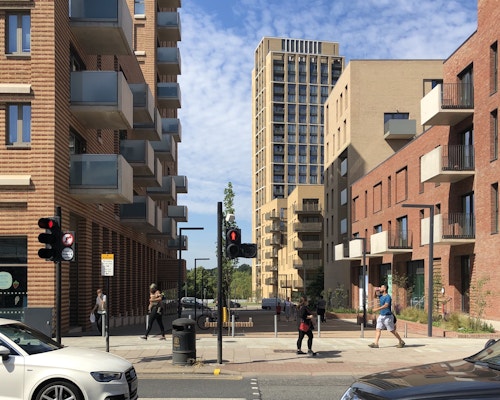
The masterplan for West Hendon is a significant estate regeneration project providing 2,000 new homes on gentle slopes overlooking the Welsh Harp Reservoir. It aims to reconnect a once isolated site with the surrounding streets and spaces. The development provides mixed-tenure housing, new public parks, a primary school, community centre and commercial space for small cafes and shops. Buildings range from mansion blocks to terraced streets to a tall signature building. Being built over six phases, diversity is at the heart of the scheme.
Context
The project proposed the phased regeneration of a low density 11.29ha residential estate in local authority ownership. Since their construction in the 1960’s, the estate’s homes had deteriorated and were hard to maintain, and residents had other concerns about the wider site. But the estate also had a strong existing community, and significant resident engagement had identified that they didn’t want to move or leave the area. A previous consented attempt at regeneration had stalled after Stage 2. We were tasked with developing a viable alternative design.
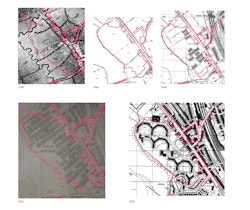
How the West Hendon site has evolved over time
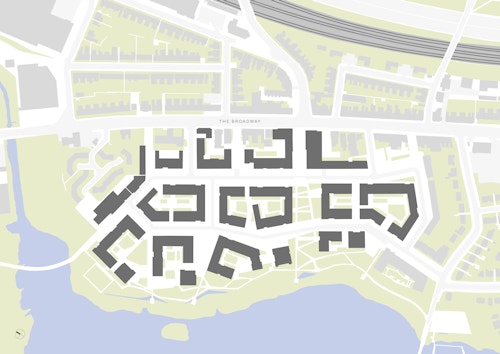
Context
Challenge
The West Hendon site has a wealth of strong points but was also facing some challenges: At 11ha it is a sizeable site, close to Hendon station. It has a local high street right on its doorstep, but one which was not exactly thriving. Adjacent to an SSSI, there are attractive views over the Welsh Harp reservoir but the border between site and SSSI was ambiguous, and a lack of surveillance had led to a culture of fly tipping. The estate had a generous amount of green open space but it was poorly defined and hard for residents to enjoy or make use of, and there was extensive surface car parking as well as a gyratory system that sliced through its middle.
Regeneration would need to address these issues but also work for existing residents. Long term phasing would unlock the project but would also need to make the estate liveable for the duration, deliver early benefits and rehome residents quickly and permanently.
Concept
The inherited masterplan had significant viability issues that were exacerbated by a wide-ranging requirement for CPOs and the unpopular temporary rehousing of residents. Our revised plan built in a commitment to moving residents only once directly into their new homes, a step that was instrumental in unblocking the regeneration. ‘Right to Buy’ leaseholders were also offered a new shared ownership home on site.
To avoid delays, early phases were identified that required neither CPO, nor demolition, and made use of existing infrastructure networks. New homes in the first delivered phase were all constructed on vacant plots within the estate.
A balance was struck between new private homes and the re-provision of affordable high-quality new homes. The decision to locate the bulk of the homes away from the busy Broadway rather than alongside it as had originally been proposed delivered a substantial number of attractive homes for private sale as part of the first phase and retained a focus on commercial properties around the High Street, an approach that was fundamental to financing later phases.
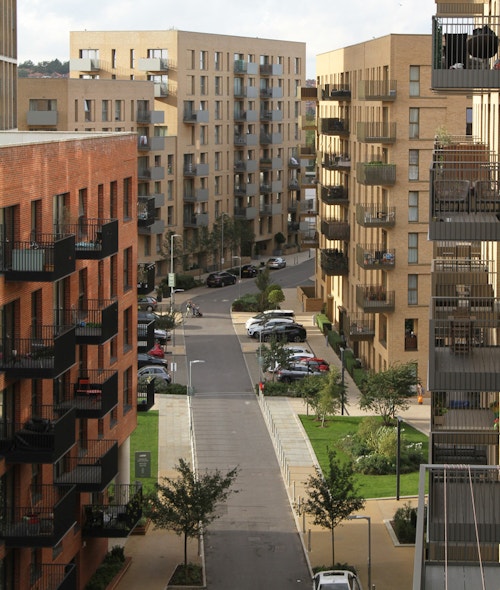
1/4
New streets and new blocks
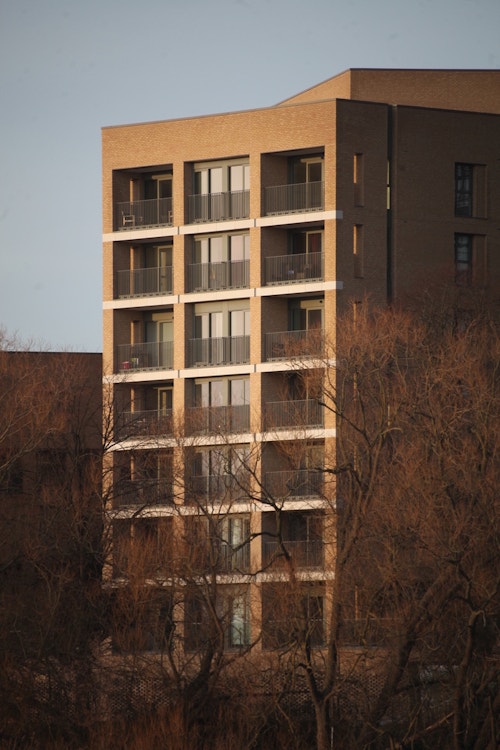
2/4
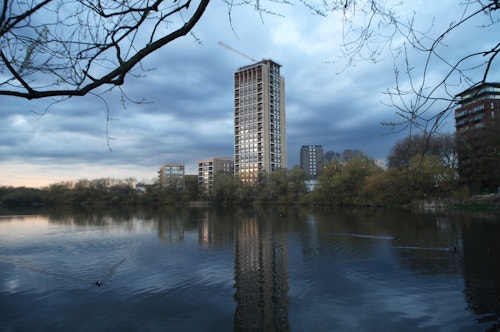
Homes orientated to enjoy views across the Welsh Harp
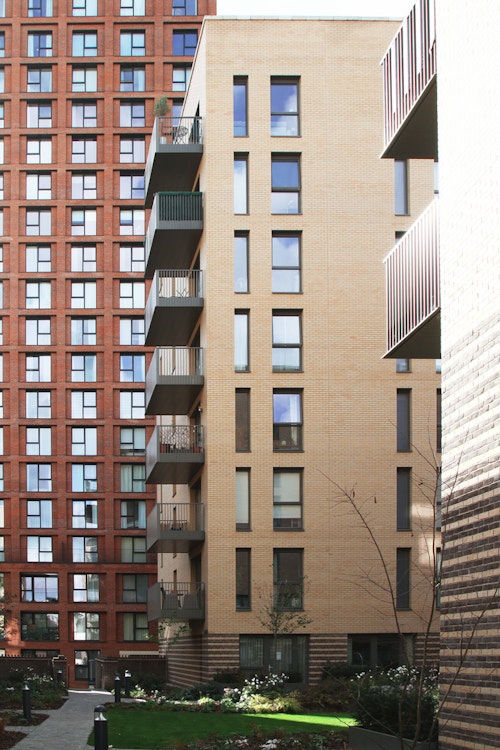
3/4
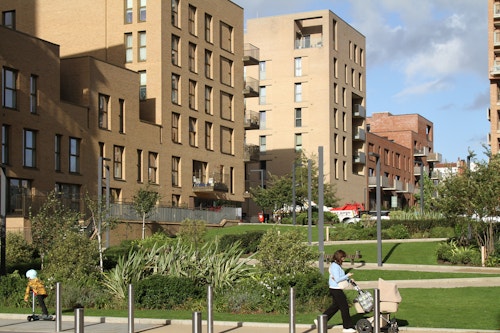
Brick is the dominant material, employed in a variety of colours and patterns
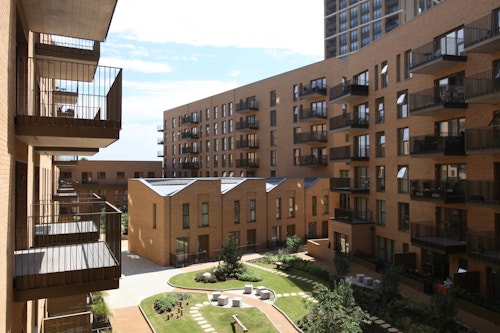
4/4
New homes mix tenures and typologies
Process
The new estate comprises homes of different tenure, scale and a diversity of typology; these include towers, apartment buildings, terraced houses and hybrid urban blocks with multiple typologies arranged around a courtyard.
The masterplan mandates a consistent architectural language with variations on a theme for visual richness, giving the local authority the security of a quality development all the way through to the final phase, whilst maintaining a coherent sense of place. Brick is used throughout. The introduction of other architects to design buildings for the projects later phases only adds to this richness.
Inside, homes make efficient use of space, minimising circulation and maximising living space, with views of the water for as many residents as possible.
The park was reshaped to better manage and enjoy the edge of the SSSI. A greener, safer route between the station and the Welsh Harp was developed through a sequence of landscaped spaces, and this was delivered in an early phase of the project. A new bridge will link the site to West Hendon playing fields increasing access to green space for recreation and exercise.
A new school and community centre are part of the process of stitching the estate more closely into the wider neighbourhood. Retail and commercial units are set around a new urban square recessed from but adjacent to the High Street. This is intended to support the viability of the local centre through both an increase in potential customers and footfall. A resident’s gym is also provided.
The relationship with the adjacent SSSI has been further established by accommodating a base for a new community warden within the estate.
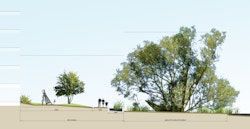
The edge condition between the site and the SSSI has been carefully considered
Impact
Estate regeneration is an emotive subject. At West Hendon around 1,300 additional homes will ultimately have been provided, the wider environment improved (less traffic, fewer parked cars, better quality green space) and residents who wanted to stay rehoused in higher quality new homes. The whole process takes time; over a decade will have elapsed since the masterplan was designed and the final homes occupied and the scale of the rebuilding inevitably causes disruption. Yet in the words of one re-homed resident:
This is the future. It’s cosy, it’s warm, it’s quiet, I love it.
Information table
- City
- London, NW9
- Use
- Mixed
- Client
- Barratt Homes London and Metropolitan Housing Trust
- Status
- Current
- Size
- 11.29 ha
- Units
- 2,000
- Awards
Housing Design Awards, Shortlisted 2023
- Collaborators
Architects: Allies and Morrison, Makower Architects, Unit Architects
Structure: Halcrow, RLT, Patrick Parsons
Services: Flatt Consulting, RHB Partnership, Whitecode Design Associates
Landscape: Hyder Edgar Driver, Allen Pyke Associates, Exterior Architecture, Gillespies
Cost: Turner & Townsend
Contractor: Barratt London